
Cassiterite
Exporting Cassiterite from the DRC to China: Due Diligence, Documents, Assays and Incoterms
How DRC cassiterite exports to Chinese buyers are verified: OECD-aligned due diligence, ICGLR certification, independent assays, insurance and Incoterms.
Published
By Afrimet Global Resources
Why this corridor needs a documented approach
Cassiterite, the principal ore of tin, is one of the designated minerals covered by Great Lakes regional certification and by international responsible-sourcing guidance. A consignment moving from the Democratic Republic of the Congo to a smelter or trader in China therefore passes several layers of review: DRC export controls, regional certification, the buyer’s own due-diligence system, carrier and insurer requirements, and Chinese import formalities. Each layer is looking for the same thing — a consistent, verifiable account of the material and of every party that handles it.
This guide sets out the questions Afrimet Global Resources considers before a cassiterite enquiry for a Chinese destination progresses. It complements our earlier note on what buyers should specify in a cassiterite request for quotation, and concentrates instead on the export, verification and delivery chain. It does not describe any available lot, and it is not legal, customs or regulatory advice.
Due diligence: the OECD framework and Chinese guidelines
Responsible sourcing
The OECD Due Diligence Guidance for Responsible Supply Chains of Minerals from Conflict-Affected and High-Risk Areas sets out a five-step framework: establish strong company management systems; identify and assess risk in the supply chain; design and implement a strategy to respond to identified risks; carry out independent third-party audits at identified points in the supply chain; and report on supply-chain due diligence. Parts of eastern DRC are widely treated as conflict-affected and high-risk, so buyers should expect enhanced checks for material that originates in, or transits through, those areas.
For Chinese counterparties, the China Chamber of Commerce of Metals, Minerals & Chemicals Importers & Exporters (CCCMC) published the Chinese Due Diligence Guidelines for Responsible Mineral Supply Chains, which take the OECD Guidance and the UN Guiding Principles on Business and Human Rights as their basis. In practice, a Chinese smelter or trader may ask the seller for a supply-chain questionnaire, mine-of-origin information, chain-of-custody records and evidence of how identified risks were assessed. A seller that cannot answer those questions in writing is unlikely to complete the purchaser’s onboarding.
Due diligence also runs in both directions. The exporter should know who the buyer is, who owns and controls it, whether any party is subject to sanctions, and whether the stated end use and payment route are consistent with the contract.
Traceability and the ICGLR certificate
Origin evidence
Tin is one of the four designated minerals — tin, tantalum, tungsten and gold — under the Regional Certification Mechanism of the International Conference on the Great Lakes Region (ICGLR). In the DRC, the Centre d’Expertise, d’Evaluation et de Certification (CEEC) is the focal point for ICGLR certification. According to the CEEC, each export of designated material, including supporting chain-of-custody and mine-of-origin documentation, is reviewed before a certificate is issued.
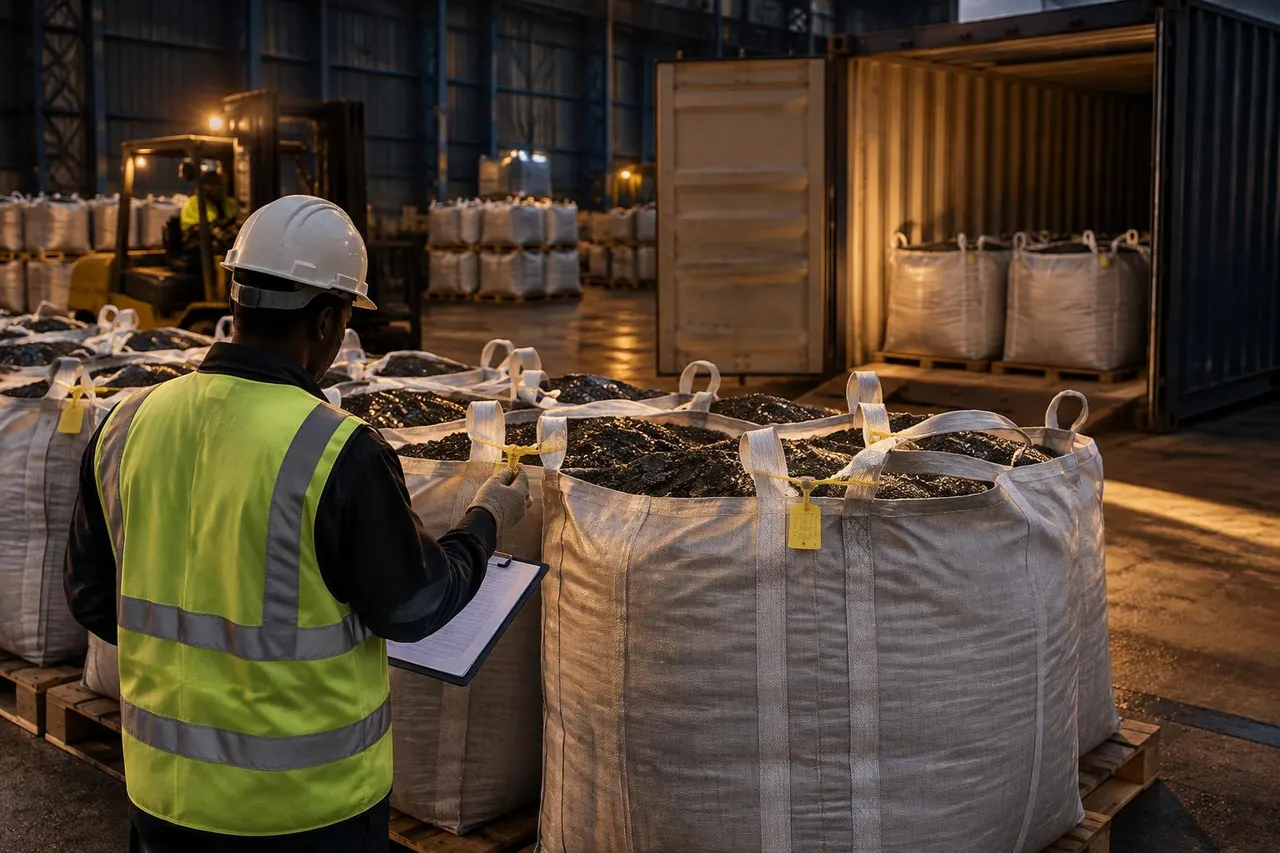
The ICGLR framework classifies mine sites according to inspection results, and an exporter’s lot should be traceable to sites whose status permits certified export. Industry upstream traceability programmes, where they apply, may add bag tagging and incident reporting at mine and processing stages. A buyer should ask how bag or lot identifiers from the mine site, trading counter and processing stage reconcile with the export documents, and how any blending, repacking or weight change was recorded.
A certificate of origin or an ICGLR certificate does not by itself prove that the party offering the cargo has authority to sell it. Commercial authority, title and payment arrangements still require separate verification.
The export documentation file
Documents
Requirements change and vary by transaction, so the file should be checked against current DRC, transit-country and Chinese rules for each shipment. Names, weights and lot references must agree across every document; inconsistencies are among the most common reasons a bank, carrier or customs authority holds a consignment. A complete cassiterite export file commonly needs to cover:
- Sales contract identifying seller, buyer, product, lot references, quantity basis, assay basis and delivery term.
- Seller corporate records, trading and export authorisations, and written authority to sell the specific lot.
- Mine-of-origin and chain-of-custody records, including any traceability tags and the ICGLR certificate where applicable.
- Independent weighing, sampling, moisture and assay certificates linked to the same lot references.
- Commercial invoice, packing list, and container and seal numbers.
- Export declarations and any royalty, tax or regulatory clearances required by the DRC authorities.
- Transport documents for the inland and international legs, such as road or rail consignment notes and the bill of lading.
- Insurance certificate or policy evidence matching the agreed Incoterm.
- Import documents required in China, confirmed by the buyer’s customs broker, including classification under the tin ores and concentrates heading (HS 2609) and any destination inspection requirements.
Independent assays and weight determination
Inspection
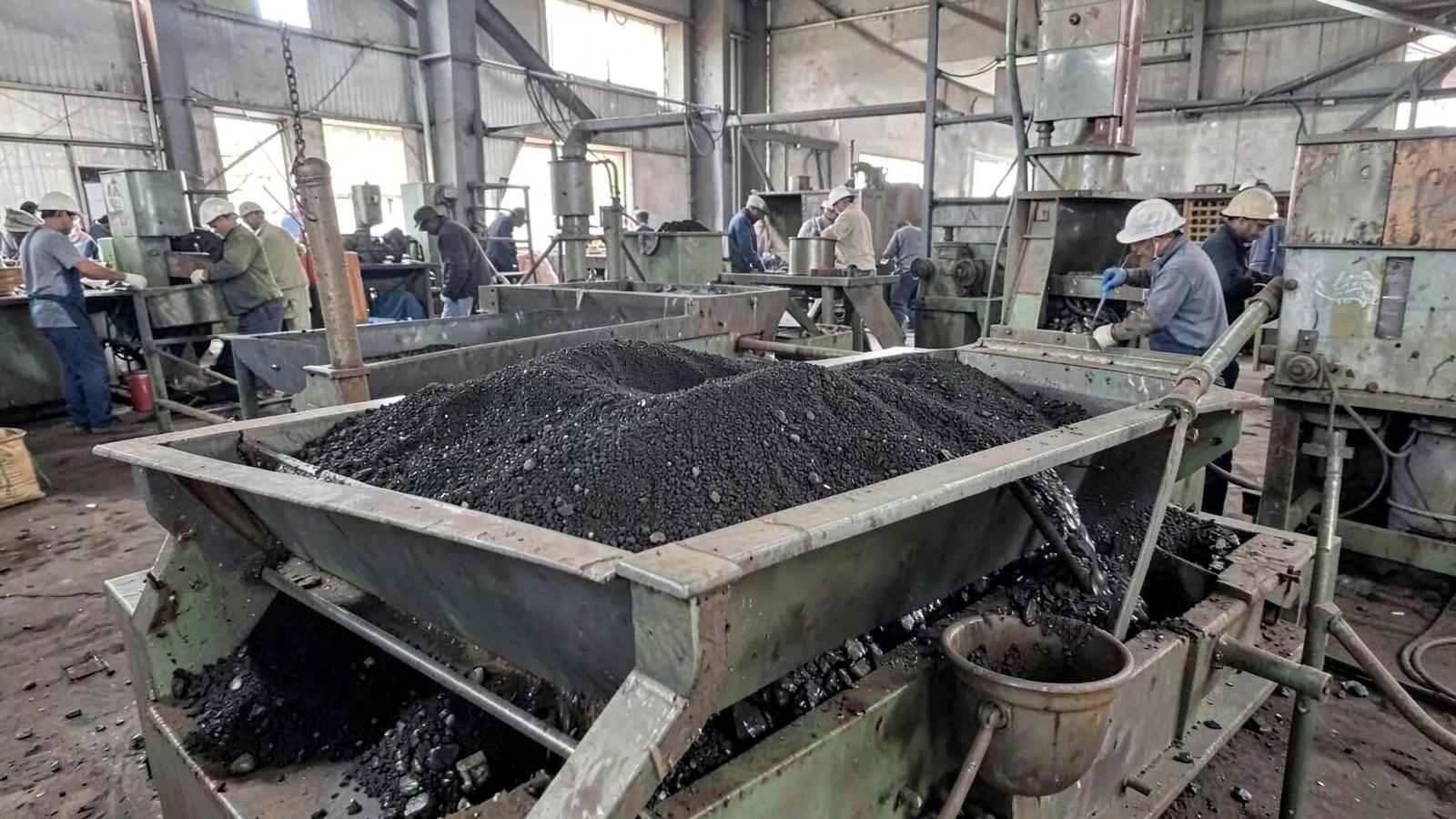
Cassiterite concentrate is commonly settled on agreed tin content, so the assay basis carries direct commercial weight. The contract should name the independent inspection company, the sampling and weighing location, the sample-preparation method, the number of sealed sample splits and who holds them, and the laboratory and analytical method for tin and for any impurity elements the receiving smelter specifies.
State whether load-port or discharge-point results govern settlement, how moisture is measured, what difference between seller and buyer results is acceptable, and how an umpire laboratory is chosen if results differ beyond that tolerance. A certificate issued on a sample that cannot be linked to the sealed lot carries little evidential weight. Our cassiterite RFQ article explains dry weight, Sn assay and payable tin in more detail.
Verifying the Chinese buyer
Counterparty
Before releasing documents or committing material, an exporter should verify the buyer’s registered legal name and business licence, its ability to import mineral concentrates, its beneficial owners and directors, and the smelter or facility that will receive the material. Sanctions and adverse-media screening should cover the buyer, its bank, any agent and the receiving facility.
Where the receiving smelter participates in an industry assurance programme, ask for its current status rather than relying on an old certificate or logo. Confirm that the entity signing the contract, the entity opening any documentary credit and the consignee are the same, or that any difference is explained and documented. Requests to send samples or documents to unrelated third parties, late changes of consignee, or payment through an unconnected account are reasons to pause.
Cargo insurance across every leg
Risk cover
A consignment from the DRC may travel long distances by road or rail before reaching an ocean port, and then by sea to China. Insurance should therefore be considered for each leg, not only the ocean voyage. Check whether cover is warehouse-to-warehouse, whether inland transit and port storage are included, which perils are covered, and whether war, strikes, riots and civil commotion cover is needed for the route.
Under Incoterms® 2020, the seller’s default insurance obligation under CIF remains the more limited Institute Cargo Clauses (C), while CIP now calls for the broader Institute Cargo Clauses (A); in both cases the minimum insured amount is 110% of the contract price. Parties may agree a different level of cover, but should state it in the contract. The insured value, named assured, loss payee and claims procedure should match the payment terms.
Choosing an Incoterm for a landlocked origin
Delivery terms
Incoterms® rules define where the seller delivers, when risk passes, and which party arranges carriage, insurance and export or import clearance. They do not transfer title, set the price or determine payment; those must be addressed in the contract itself.
Because DRC cassiterite generally travels overland before it can be loaded on a vessel, the choice of rule matters. FOB, CFR and CIF are designed for goods delivered on board a vessel at the port of shipment and are not well suited to goods handed to a carrier earlier, such as containers delivered to an inland depot or terminal. Rules for any mode of transport — FCA, CPT or CIP — may describe that handover more accurately. Whichever rule is chosen, name the precise place and the edition, for example “CIP [named Chinese port or facility] Incoterms® 2020”.
Export clearance is the seller’s responsibility under every rule except EXW, and import clearance in China falls to the buyer under every rule except DDP. EXW and DDP can therefore be difficult on this corridor, because each places clearance in a country where the responsible party may have no presence.
Pre-shipment checklist for a DRC–China cassiterite consignment
Before material moves, both parties should be able to confirm:
- Seller identity, export authorisations and written authority to sell the specific lot.
- Mine of origin, site status and chain-of-custody records reconciled with lot and bag identifiers.
- ICGLR certificate and DRC export clearances obtained where applicable.
- Buyer, beneficial owners, receiving smelter and bank screened and documented.
- Independent sampling, weighing, moisture and assay procedure agreed, including umpire rules.
- Incoterm, named place, edition and cost allocation written into the contract.
- Insurance level, perils, insured value and covered legs confirmed in writing.
- Chinese import classification and inspection requirements confirmed by the buyer’s customs broker.
Discussing a cassiterite requirement with Afrimet
Buyers and smelters in China considering DRC-origin cassiterite can send a documented requirement through Afrimet’s quotation page or to Trade@afrimetglobal.com, including the receiving facility, specification, preferred Incoterm and inspection arrangements. Each enquiry is reviewed against the checks above. No supply, price, availability or delivery date is promised before verification, responsible-sourcing review, agreed documentation and contract.